
Lao Tzu quotes on leadership come from a book addressed to rulers: 56 of the Daodejing’s 81 chapters use a word for a ruler, the people or the world, and its ideal figure, the 聖人 shèngrén, appears in 25 of them. The text doesn’t have a word for “leader”. Its most quoted line on the subject is real: 功成事遂,百姓皆謂我自然, “the work is accomplished and the people all say: we are like this of ourselves” (chapter 17, translated from the Chinese). The four-grade ladder of leaders built around it hangs on one disputed character.
Lao Tzu quotes on leadership at a glance
Eleven passages carry the political teaching. Every one can be checked against the Chinese text of the Daodejing, and the chapter numbers below are the standard ones used by both Legge’s 1891 Tao Teh King and modern editions.
| Quote fragment | Chapter | What it is arguing |
| “the people all said, ‘We are as we are, of ourselves!'” | 17 | How little a ruler should be felt |
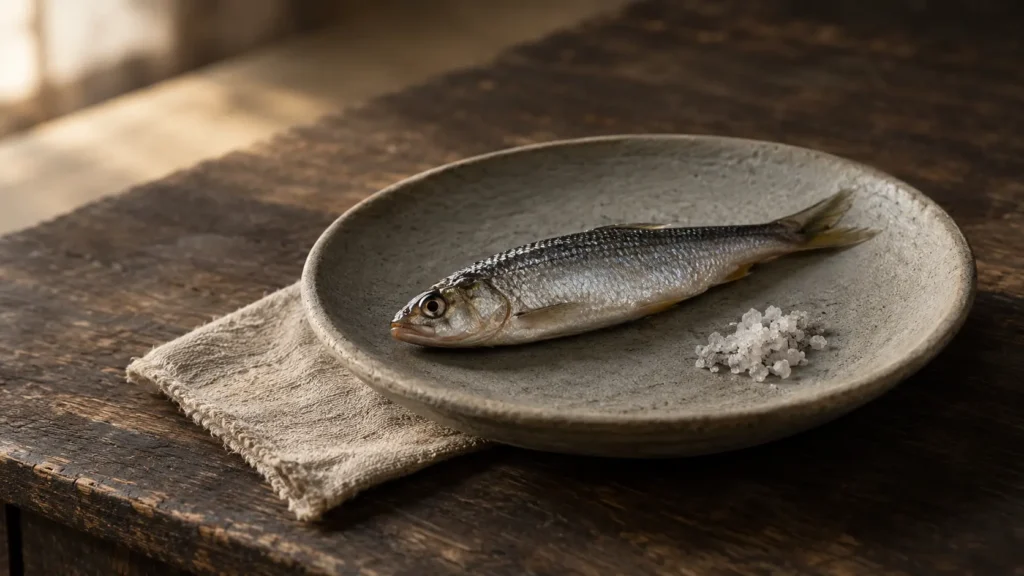
| “Governing a great state is like cooking small fish.” | 60 | Interference ruins what it touches |
| “wishing to be before them, places his person behind them” | 66 | Precedence bought by yielding |
| “I will do nothing (of purpose), and the people will be transformed of themselves” | 57 | Four things a ruler stops doing |
| “The sage has no invariable mind of his own” | 49 | Taking the people’s mind as one’s own |
| “The kingdom is a spirit-like thing, and cannot be got by active doing.” | 29 | The world is not a project |
| “When there is this abstinence from action, good order is universal.” | 3 | Governing by emptying, not filling |
| “The people are difficult to govern because of the (excessive) agency of their superiors” | 75 | Bad government is over-government |
| “arms, however beautiful, are instruments of evil omen” | 31 | Force as a failure |
| “he who would administer it with the love which he bears to his own person may be entrusted with it” | 13 | Who may be handed the world |
| “The highest excellence is like (that of) water.” | 8 | Taking the low place |
How much of the Daodejing is actually about ruling?
More of it than the quote pages suggest, and the shape of it is not what a reader coming from “leadership” expects. I fetched two Chinese editions, read both into plain text, and counted the text twice, once against each. The two counts disagree in only one place.
聖人 shèngrén — “sage”; the text’s ideal ruler, and the figure every English page calls “the leader” or “the Master”. It occurs 31 times in the 道德經 edition at Gutenberg #7337 and 32 times in the 老子 edition at #24039, spread over 25 and 26 chapters respectively.
無為 wúwéi — literally “no doing”, better read as acting without coercion or display; the term wu wei carries in Daoism. It occurs 13 times in both editions, in 10 chapters in one and 11 in the other. It is the concept the whole political teaching hangs on, and it occupies about one chapter in eight.
Put those beside the 56 chapters that so much as mention a ruler, the people or the world, and the book attributed to Lao Tzu looks like what it is: advice to people who hold power, written by someone who thought most of what they do makes things worse. What it is not is advice to people who want to be influential. Nearly every chapter is addressed downward to someone who already has the position, and the consistent instruction is to use less of it.
What does chapter 17 actually grade?
Chapter 17 of the Daodejing is the source of the most quoted line in the set, and the English built on it is doing three things the Chinese does not.
“In the highest antiquity, (the people) did not know that there were (their rulers). In the next age they loved them and praised them. In the next they feared them; in the next they despised them.”
— Daodejing 17 · 太上,下知有之,其次親而譽之,其次畏之,其次侮之 · trans. Legge, 1891
Legge’s 1891 rendering is the first thing to notice: he reads 太上 as “in the highest antiquity”, so the four items are four ages, not four grades of manager. The famous ladder of leaders does not appear in the standard Victorian translation at all. It arrives with twentieth-century English, and it arrives with a specific reading of one character.
The Chinese clause is 太上,下知有之 in the 老子 edition and 太上,下不知有之 in the 道德經 edition. One character apart, and the difference is the whole quote. 下知有之 means those below know that he exists; 下不知有之 means those below don’t know he exists. The invisible-leader reading, the one printed on every leadership page, needs the second.
The excavated copies read the first: the Guodian bamboo slips and both Mawangdui silk manuscripts give 大上,下知有之, as the collation at lius.cc records, and the 老子全译 collation note reports 邓锜, 吴澄 and the Ming founder’s commentary reading 下 where its base text has 不. The variant is unresolved in the received text, and I can’t settle it from two transcriptions. Gao Heng glossed the phrase as meaning the people know there is a ruler and hold no liking or resentment toward him, which is a claim about indifference rather than invisibility.
“Their work was done and their undertakings were successful, while the people all said, ‘We are as we are, of ourselves!'”
— Daodejing 17 · 功成事遂,百姓皆謂我自然 · trans. Legge, 1891
The closing line survives every variant, and even it is routinely sharpened. 我自然 has no verb of doing in it: the people say “we are thus, of ourselves”. English turns that into “we did it ourselves”, which supplies the achievement the Chinese leaves as a state of affairs.
The passages, chapter by chapter
Governing a great state is like cooking small fish (60)
“Governing a great state is like cooking small fish.”
— Daodejing 60 · 治大國,若烹小鮮 · trans. Legge, 1891
Six characters, and both Chinese editions print them identically. I searched each for a second clause and found no Chinese source for “you spoil it with too much poking”, which is a gloss that hardened into a quotation somewhere between Legge and the present; BrainyQuote now prints it as part of the line. The chapter doesn’t stop there, either: it goes on to say that when the world is governed by the Way, the spirits of the dead lose their power to harm, and neither they nor the sage harms the people. Leadership pages quote the first six characters and stop.
The sea wins by lying lower (66)
“That whereby the rivers and seas are able to receive the homage and tribute of all the valley streams, is their skill in being lower than they; it is thus that they are the kings of them all. So it is that the sage (ruler), wishing to be above men, puts himself by his words below them, and, wishing to be before them, places his person behind them.”
— Daodejing 66 · 江海所以能為百谷王者,以其善下之…欲先民,必以身後之 · trans. Legge, 1891
This is the passage behind “to lead people, walk behind them”, and unlike most of the set it really is in the book. Two things get lost in the paraphrase. The first half is a claim about water and topology, not about management style. And the yielding is specified: 以言下之, in speech, and 以身後之, in person. It is a discipline of how one talks and where one stands, not a general instruction to follow the crowd.
I do nothing, and the people transform themselves (57)
“I will do nothing (of purpose), and the people will be transformed of themselves; I will be fond of keeping still, and the people will of themselves become correct. I will take no trouble about it, and the people will of themselves become rich; I will manifest no ambition, and the people will of themselves attain to the primitive simplicity.”
— Daodejing 57 · 我無為,而民自化;我好靜,而民自正;我無事,而民自富;我無欲,而民自樸 · trans. Legge, 1891
Four clauses, each ruler’s abstention paired with a people’s result, and the chapter earns them with a diagnosis rather than a promise: 法令滋彰,盜賊多有, the more laws and decrees are displayed, the more thieves and robbers there are. That is a stronger claim than “less intervention is efficient”. It says the intervention is what produces the disorder it claims to answer.
The sage has no fixed mind (49)
“The sage has no invariable mind of his own; he makes the mind of the people his mind.”
— Daodejing 49 · 聖人無常心,以百姓心為心 · trans. Legge, 1891
Here the two editions differ again: #24039 prints 聖人無常心, the sage has no constant mind, while #7337 prints 聖人常無心, the sage is constantly without a mind. Legge translated the first. Readings of this chapter as an early statement of empathy usually stop before the last line, where the sage 皆孩之, treats the people as children, which sits awkwardly beside anything called empowerment.
The world is a vessel no one can work on (29)
“If any one should wish to get the kingdom for himself, and to effect this by what he does, I see that he will not succeed. The kingdom is a spirit-like thing, and cannot be got by active doing. He who would so win it destroys it; he who would hold it in his grasp loses it.”
— Daodejing 29 · 將欲取天下而為之,吾見其不得已。天下神器,不可為也 · trans. Legge, 1891
神器 is the difficult word: a spirit-vessel, an implement of the spirits, something numinous and not to be handled. Legge renders it “a spirit-like thing”. Whatever the exact sense, the grammar is plain: 不可為也, it can’t be worked on. Whatever a leader treats as a project, this chapter says, is being treated as the wrong kind of object.
Governing by emptying rather than filling (3)
“He constantly (tries to) keep them without knowledge and without desire, and where there are those who have knowledge, to keep them from presuming to act (on it). When there is this abstinence from action, good order is universal.”
— Daodejing 3 · 常使民無知無欲…為無為,則無不治 · trans. Legge, 1891
Every collection of Lao Tzu quotes on leadership prints chapter 17 and skips this one. I haven’t. 虛其心,實其腹, empty their minds and fill their bellies, isn’t a metaphor, and 常使民無知無欲 isn’t a claim about reducing distraction. A text that says this isn’t a text about empowering anyone, and a page that quotes its gentle chapters while concealing this one is editing the author rather than citing him.
People are hard to govern because their superiors act (75)
“The people are difficult to govern because of the (excessive) agency of their superiors (in governing them). It is through this that they are difficult to govern.”
— Daodejing 75 · 民之難治,以其上之有為,是以難治 · trans. Legge, 1891
The most direct sentence in the book about why government fails, and the one least likely to appear on a leadership page, because it names the ruler as the cause. 有為 is the antonym of 無為: purposive, intervening action. The people aren’t described as unruly. They’re described as being worked on.
Arms are instruments of ill omen (31)
“Now arms, however beautiful, are instruments of evil omen, hateful, it may be said, to all creatures. Therefore they who have the Tao do not like to employ them.”
— Daodejing 31 · 夫兵者,不祥之器,物或惡之,故有道者不處 · trans. Legge, 1891
The chapter’s political point is at the end: 夫樂殺人者,則不可以得志於天下矣, whoever takes pleasure in killing will not get his way in the world. A ruler who enjoys the instruments of force loses the standing that made him a ruler.
Who may be handed the world (13)
“Therefore he who would administer the kingdom, honouring it as he honours his own person, may be employed to govern it, and he who would administer it with the love which he bears to his own person may be entrusted with it.”
— Daodejing 13 · 故貴以身為天下,若可寄天下;愛以身為天下,若可托天下 · trans. Legge, 1891
The test in chapter 13 is a test of attachment. The person fit to be given the world is the one who values it the way he values his own body, which is to say unwillingly and not as an acquisition. It’s the same measure the text applies to a single existence rather than a state, which is why the companion page on Lao Tzu on life ends up quoting chapter 44 rather than anything here.
The highest excellence is like water (8)
“The highest excellence is like (that of) water. The excellence of water appears in its benefiting all things, and in its occupying, without striving (to the contrary), the low place which all men dislike.”
— Daodejing 8 · 上善若水。水善利萬物而不爭,處眾人之所惡 · trans. Legge, 1891
Water isn’t praised here for being soft. It is praised for taking the place nobody wants, which is the same argument as chapter 66 in a different image. The whole corpus of Lao Tzu’s advice to the powerful can be stated as: sit lower, spend fewer words, touch it less.
Which Lao Tzu leadership quotes are misattributed?
Four lines circulating under his name fail at the level of the Chinese, and one of them fails in a way that changes the teaching. I checked each against both editions before calling it wrong. The longer list sits at Fake Lao Tzu Quotes.
“Go to the people. Live with them. Learn from them. Love them. Start with what they know. Build with what they have.” This is the most reprinted Lao Tzu leadership quotation on the internet, and Wikiquote’s Laozi page files it under “Not spoken by Laozi”, noting that only the final sentence, the one about the people saying they did it themselves, connects to chapter 17, and that the origin of the rest is unclear. The first six clauses read like twentieth-century community-development advice because that is roughly what they are.
“To lead people, walk behind them.” Genuine, but it belongs to chapter 66, not chapter 17, and it travels as a single quotation welded to a different chapter’s ending. Legge renders the clause “wishing to be before them, places his person behind them”, which is the same teaching with the paradox left visible. The two-chapter fusion is on AZQuotes, BrainyQuote and most of the leadership blogs.
“Governing a great nation is like cooking a small fish. You spoil it with too much poking.” The first sentence is chapter 60 exactly. The second has no Chinese behind it. Both Gutenberg editions print 治大國,若烹小鮮 and stop.
“Leadership is your ability to hide your panic from others.” Listed under Laozi on AZQuotes’ leadership tag, alongside genuine material. It has no counterpart in the text, and it inverts the chapter 13 test, which is about a ruler’s attachment rather than a ruler’s composure. The same tag also carries “The best of all leaders is the one who helps people so that eventually they don’t need him”, which is modern in every word, and a three-grade version of chapter 17 (wicked, good, great) that the four-grade text does not support.
Questions People Ask About Leadership in the Daodejing
What is the most famous Lao Tzu quote about leadership?
“A leader is best when people barely know he exists,” which is a twentieth-century English rendering of Daodejing 17. The Chinese clause is 太上,下知有之 in one edition and 太上,下不知有之 in another, and the excavated bamboo and silk copies read 下知有之: those below know he exists. The line’s closing sentence, 百姓皆謂我自然, is in every witness.
Did Lao Tzu say “to lead people, walk behind them”?
The teaching is real and the wording is modern. Chapter 66 reads 欲先民,必以身後之, and Legge’s 1891 rendering is “wishing to be before them, places his person behind them”. What circulates is a paraphrase of that clause, usually attached to the ending of chapter 17, which is a different chapter.
Which chapter of the Tao Te Ching is about leadership?
Eleven chapters carry the political teaching directly: 3, 8, 13, 17, 29, 31, 49, 57, 60, 66 and 75. Chapter 17 is the most quoted, chapter 66 supplies the “lead from behind” family of lines, and chapter 60 supplies the small-fish simile. The text has no single leadership chapter and no word for leadership.
Are Lao Tzu quotes on leadership really from the Tao Te Ching?
Some are and several are not. The lines about the people saying they did it themselves, about cooking a small fish, and about the rivers and seas are all in the text and can be located by chapter. “Go to the people. Live with them. Learn from them” is not: Wikiquote files it as misattributed. Anything carrying a modern management vocabulary, “hide your panic” included, is modern, and Lao Tzu quotes on leadership are where that vocabulary concentrates.